American researcher studies Muslim farmers in Indonesia’s Kerinci, finds agricultural modernization affects emotions

09 February 2026
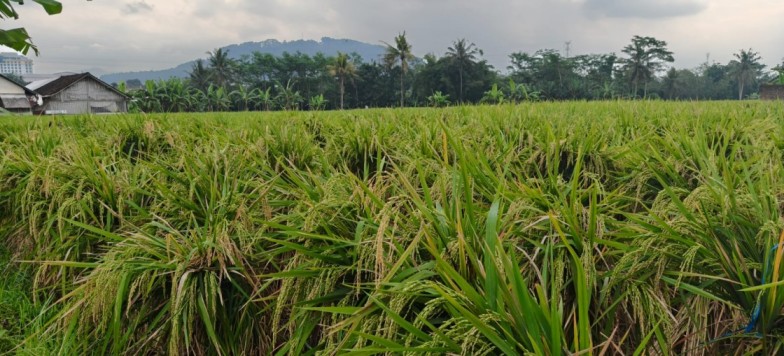
A view of a paddy field in Indonesia's district of Magelang in Central Java province, on June 11, 2025. (Indonesia Window)
Fast-rice varieties increase productivity and allow more frequent harvests, yet farmers also feel a loss of traditional values due to dependence on chemical inputs and larger capital.
Bogor, W Java (Indonesia Window) – An anthropologist from the University of California, Wayne Huang, recently conducted research on the relationship between Islam and the state at the village level, with fieldwork taking place in Indonesia’s Kerinci district, Jambi province.
During his ethnographic research, Huang’s focus evolved as he discovered that agricultural modernization through the Green Revolution not only boosted food production but also reshaped how rural communities understand welfare, progress, and everyday life.
Huang is currently a Ph.D. Candidate in the Department of Anthropology at the University of California, Santa Cruz (UCSC), the United States. For more than a year, he lived among villagers and followed the daily lives of local Muslim farmers.
This in-depth ethnographic approach enabled him to explore the interconnections between agriculture, religion, the environment, local politics, and kinship relations.
He shared his findings during the event ‘Sharing from the Field, Foreign Researcher Final Report,’ themed ‘Fast Rice, Slow Change: Living with the Green Revolution,” held in Jakarta on Thursday (Feb. 5), as cited from the National Research and Innovation Agency (BRIN) network website on Monday.
“I realized that the relationship between Islam and the state cannot be understood without looking at kinship and broader social relations. From there, my attention shifted to how rural communities maintain togetherness amid very rapid social and economic change,” Huang explained.
As an entry point for analysis, the phenomenon of fast rice, high-yield varieties developed during the Green Revolution, he said, adding that fast rice has brought significant changes to farming practices and rural livelihoods.
“Fast rice increases productivity and allows more frequent harvests, but at the same time, farmers have become more dependent on chemical fertilizers, agricultural inputs, and larger capital. Their work rhythm has also become much faster,” he said, referring to fieldwork conducted from early 2024 to mid-2025.
Huang noted that these transformations have affected not only the economic sphere but also social and emotional aspects of farmers’ lives. Through stories shared by elderly farmers, he found mixed feelings toward agricultural modernization.
“Many farmers say their lives are materially better now and their needs are more fulfilled. However, they also talk about fatigue, loss, and dissatisfaction. Traditional rice varieties are seen as more durable and associated with strong sustainability values,” he added.
He emphasized that the Green Revolution has left not only material impacts but also lasting influences on how communities define progress and well-being. By tracing the journey of fast rice from production to consumption, his research reveals the paradox of agricultural modernization—higher productivity accompanied by collective exhaustion and deeper questions about what constitutes a better life.
On the same occasion, Head of BRIN’s Regional Research Center, Fadjar Ibnu Thufail, said studies like this are important for enriching social research perspectives in Indonesia.
“Field experiences like these provide a more comprehensive understanding of change at the grassroots level—not only through production figures but also through the lived experiences of communities,” he said.
The event was part of a series of research activities at PRW-BRIN involving researchers as well as doctoral and Ph.D. students affiliated with or supported by the center.
According to Fadjar, the discussion was not intended to present final research outcomes but to share the research process itself—from initial preparation and methodology to literature review and the dynamics and challenges encountered during fieldwork.
“Through this forum, we hope to learn from one another, exchange ideas, and gain new insights—whether related to research approaches, field challenges, or opportunities to expand future research issues through collaborative efforts,” Fadjar concluded.
Reporting by Indonesia Window
Bagikan

Komentar
Berita Terkait
Indonesia needs over 1 tln USD to achieve SDGs
Indonesia
•
09 Aug 2022

Freeport Indonesia donates ambulances to Papua’s Mimika Regency
Indonesia
•
04 Apr 2022
Timor-Leste PM Taur Matan Ruak expresses gratitude for Indonesia's support
Indonesia
•
10 May 2023

Indonesia donates cardiac screening machine for Palestine
Indonesia
•
10 Dec 2019


Berita Terbaru
Profile – Indonesian Islamic boarding school student discovers security flaws in systems of NASA, University of Melbourne
Indonesia
•
17 Sep 2026
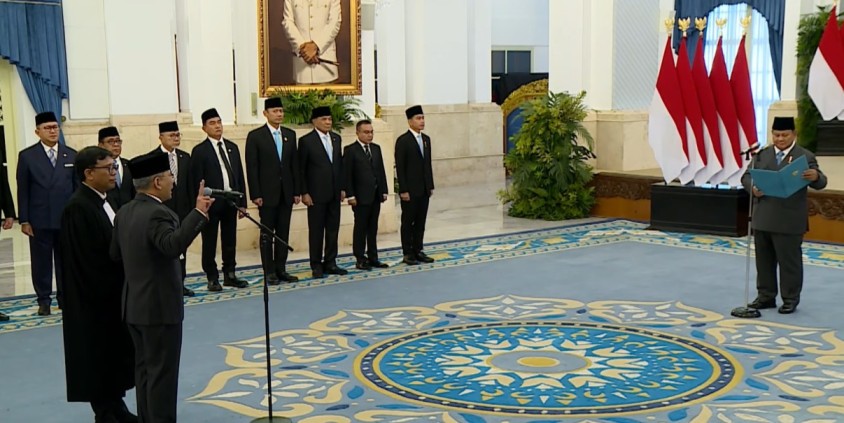
Suahasil Nazara Indonesia’s new finance minister, replacing Purbaya
Indonesia
•
14 Sep 2026
Indonesia’s professor: ‘Dhikr’ in Islam not merely verbal utterance, but matter of awareness and conduct
Indonesia
•
14 Sep 2026
Minister: Airports affected by Mount Anak Krakatau volcanic ash reopen
Indonesia
•
08 Sep 2026