Analysis – Converting Indonesia's demographic bonus into civilization dividend

20 July 2026
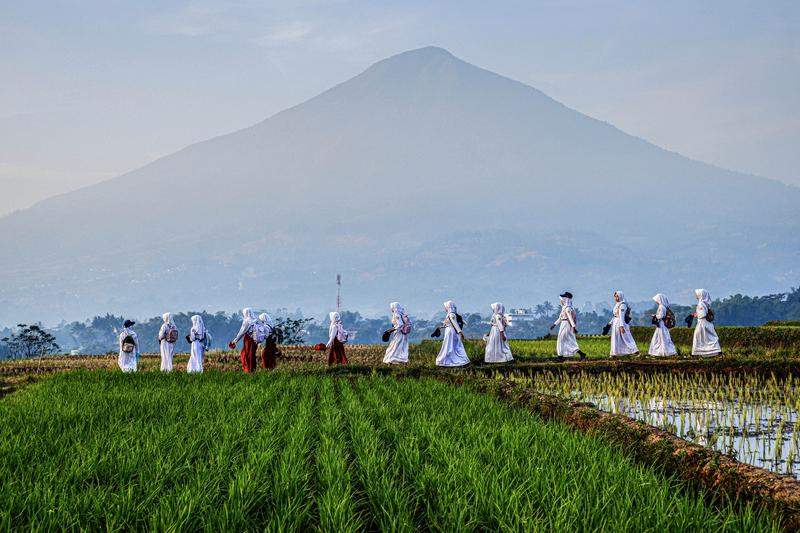
Students were walking past rice fields with Mount Cikuray in the background as they were heading to school in Indonesia’s Mekarsari Village, Garut District, West Java Province, on July 13, 2026, the first day of the 2026/2027 academic year. (Xinhua/Algi Febri Sugita)
Indonesia is counting down to the peak of its demographic bonus (demographic dividend). By 2030, nearly two-thirds of the country's population are expected to be of productive age (15-64 years old).
With a population projected to approach 300 million, Indonesia is expected to have one of the largest workforces in the world.
History shows that momentum like this has changed the face of many countries.
From 1950 to 1996, Japan used it to accelerate industrialization; South Korea used it as a stepping stone to becoming a developed nation between the 1960s and early 2000s; and Singapore turned its demographic bonus, which occurred from 1967 to 2004, into a major investment in the quality of its human resources.
However, history also sounds a warning. The demographic bonus is not a gift that automatically brings prosperity; it is more like a plot of highly fertile land that can produce abundant harvests if cultivated properly, but can also turn into a wasteland overgrown with bushes and problems if neglected.
On many occasions, Indonesia’s Vice President Gibran Rakabuming Raka has brought up two powerful keywords: the demographic bonus and the mastery of AI (Artificial Intelligence).
AI may have made life easier for many people, but at the same time, it also carries numerous problems, particularly moral and ethical ones.
Without quality education, strong character, and good governance, the demographic bonus can actually lead to unemployment, poverty, social inequality, and even increased crime.
Therefore, the most important question is not, ‘How many young people do we have who are technologically proficient?’ But, ‘What kind of people are we shaping?’
Islam offers an interesting perspective
This is where Islam offers an interesting perspective. Economics recognizes the term ‘productive age,’ which is the phase when a person is deemed capable of contributing to economic activity.
In contrast, Islam calls it the age of taklif, the phase when a person reaches puberty, is of sound mind, and begins to assume the responsibilities of sharia law as a mukallaf.
Both are about responsibility, but from different starting points.
The economic perspective asks, "When does a person begin to produce value for development?"
On the other hand, Islam asks, "When does a person begin to be accountable for their entire life before Allah ﷻ?"
The answer is from the moment a person reaches puberty.
That day often comes unnoticed, because there is no graduation ceremony; no certificate of maturity is presented; no celebration marks a child's entry into a new phase of life.
In fact, the moment a child enters that period—no matter what age—their prayer is no longer just practice. Their fasting is no longer just a habit.
Their honesty, their words, their wealth, their promises, and all their life choices begin to be recorded as deeds for which they will be accounted for before Allah ﷻ.
Islam does not wait for someone to graduate from college, find a permanent job, or get married to begin educating them to carry out their duties.
The education of responsibility begins from the time a person reaches the age of taklif.
This perspective is not merely a concept found in Islamic jurisprudence (fiqh) books. History records it in the life of the Prophet Muhammad peace be upon him (ﷺ).
When he was only twelve years old, Muhammad ﷺ accompanied his uncle, Abu Talib, on a trading trip to Syria. It was no mere business trip.
Perjalanan itu bukan sekadar perjalanan bisnis. The vast desert, harsh weather, the threat of robbers, and the responsibility of safeguarding merchandise became a lifelong school that shaped his character from a young age.
It was from these journeys that the Prophet ﷺ learned that a person's greatest asset is not wealth, but trustworthiness.
It is not surprising that years later, the people of Makkah knew him by a title recognized even by his opponents: Al-Amin, the Most Trustworthy.
This character was then passed down to generations of his companions.
With this character, Islam, which was ‘born in the barren desert,’ spread throughout the world in a short time, and endured for more than 1,400 years, becoming a religion that continues to grow.
Usamah ibn Zaid was entrusted with leading a large army when he was not yet twenty years old. Mus'ab ibn Umayr was sent as the first Islamic ambassador to Madinah at a very young age.
Ali ibn Abi Talib risked his life by sleeping with the Prophet Muhammad ﷺ on the night of hijrah (move to another place) to safeguard amanah (a trust).
Jabir ibn Abdullah assumed the responsibility of his family from a young age after his father was killed in the Battle of Uhud.
They did not mature simply by growing older. They grew because they were entrusted with trust.
It was trust that shaped them. Interestingly, similar principles can be found in various modern nations.
In Australia, for example, teenagers are given the opportunity to work part-time under strict rules. Working hours are limited, safety is protected, and education remains a priority.
The goal is not just to earn extra income, but to develop habits of responsibility. It's simple: arrive on time, complete work, honor commitments, and accept the consequences for each task assigned.
In fact, this principle aligns with the spirit of Islamic education. Responsibility is not something that arises suddenly when someone receives a diploma or their first paycheck.
It is a character trait that must be cultivated gradually from a young age.
Prophet Muhammad ﷺ said, "Each of you is a leader, and each of you will be held accountable for what you lead." (Narrated by al-Bukhari and Muslim).
This hadith shows that leadership does not belong solely to presidents, ministers, or heads of families. A student leads himself.
A university student leads his or her own choices. A child leads a trust entrusted to him or her by his or her parents.
Every human being bears responsibility, no matter how small.
Therefore, discussions about the demographic bonus cannot stop at improving skills, mastering technology, or economic productivity.
All of these are important, but they will be futile if not accompanied by character building.
Indonesia not only needs millions of smart young people, but also millions of trustworthy young people.
Economics can indeed calculate when someone enters productive age and project when the demographic bonus will reach its peak, but Islam reminds us that long before a person becomes a development asset, he or she has first become a servant of Allah ﷻ, carrying a trust.
Ultimately, the future of a nation is not solely determined by the number of young people capable of working while utilizing technology.
A nation's civilization is determined by the number of generations who remain honest when no one is watching, keep promises when no one is watching, and uphold trusts when no one is forcing them.
This is where the demographic bonus is no longer merely an economic opportunity, but a civilizational bonus.
End
Author: Daday Hidayat, Lc.
Bagikan

Komentar
Berita Terkait

COVID-19 – Indonesia needs 58.7 million doses of vaccines for children
Indonesia
•
09 Nov 2021

Recruitment of Indonesian workers for Saudi Arabia only by companies
Indonesia
•
06 Mar 2022
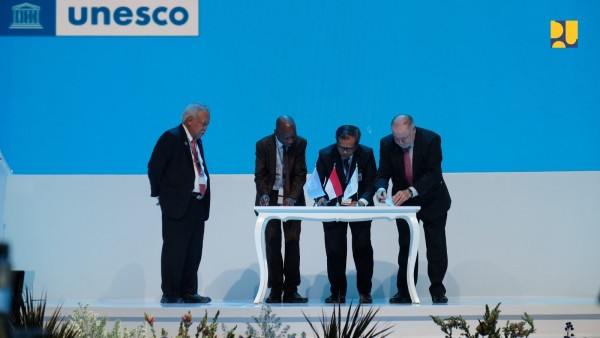
Indonesia, WWC, UNESCO sign LoI about cooperation on World Water Forum
Indonesia
•
18 Feb 2023
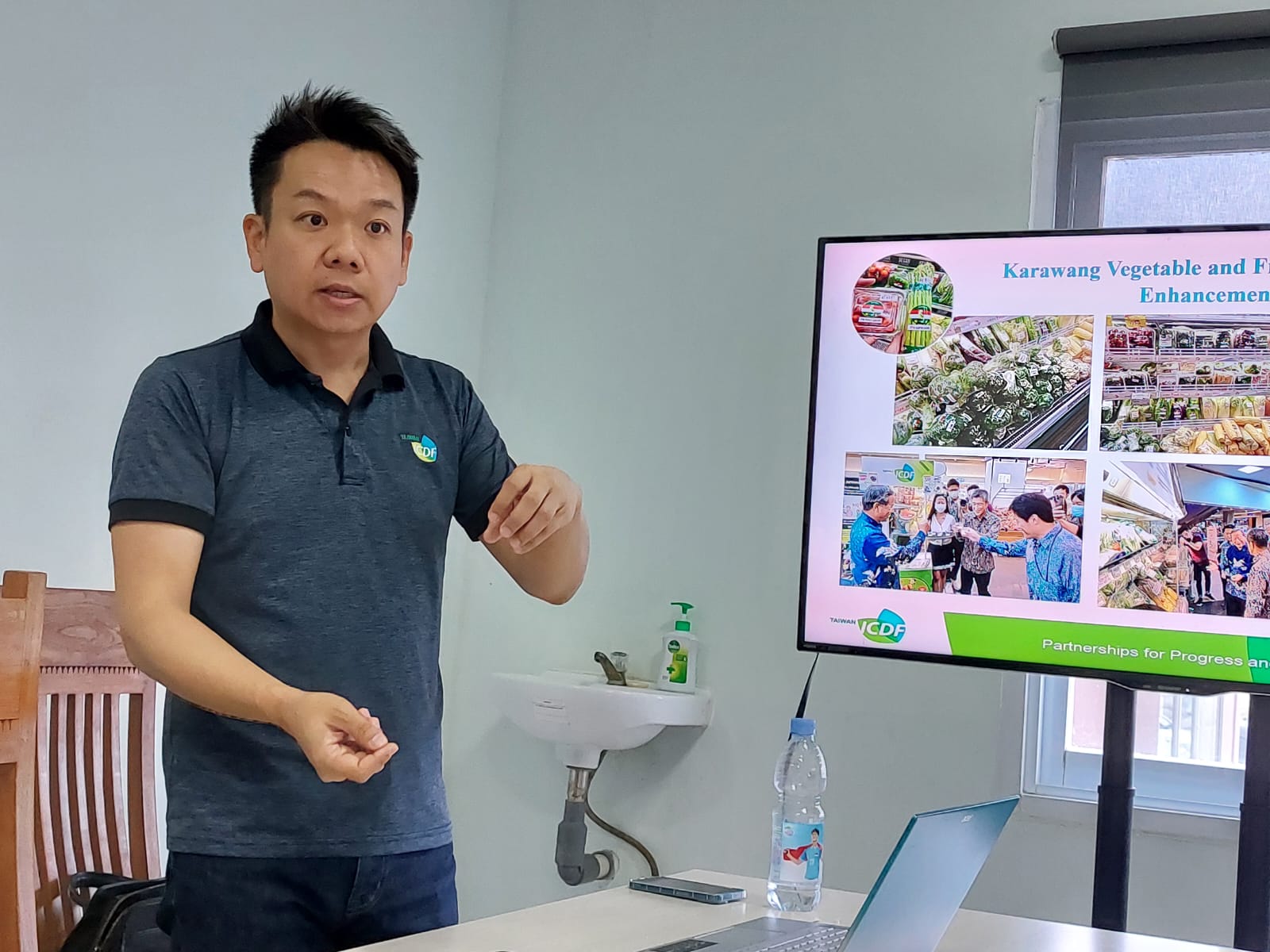
Taiwan Mission accompanies Indonesian farmers from planting to marketing
Indonesia
•
28 Oct 2024

Berita Terbaru

Profile – Indonesian Islamic boarding school student discovers security flaws in systems of NASA, University of Melbourne
Indonesia
•
17 Sep 2026
Suahasil Nazara Indonesia’s new finance minister, replacing Purbaya
Indonesia
•
14 Sep 2026
Indonesia’s professor: ‘Dhikr’ in Islam not merely verbal utterance, but matter of awareness and conduct
Indonesia
•
14 Sep 2026

Minister: Airports affected by Mount Anak Krakatau volcanic ash reopen
Indonesia
•
08 Sep 2026