In Egypt, Indonesia explains role of zakat, waqf in building social harmony

27 January 2026
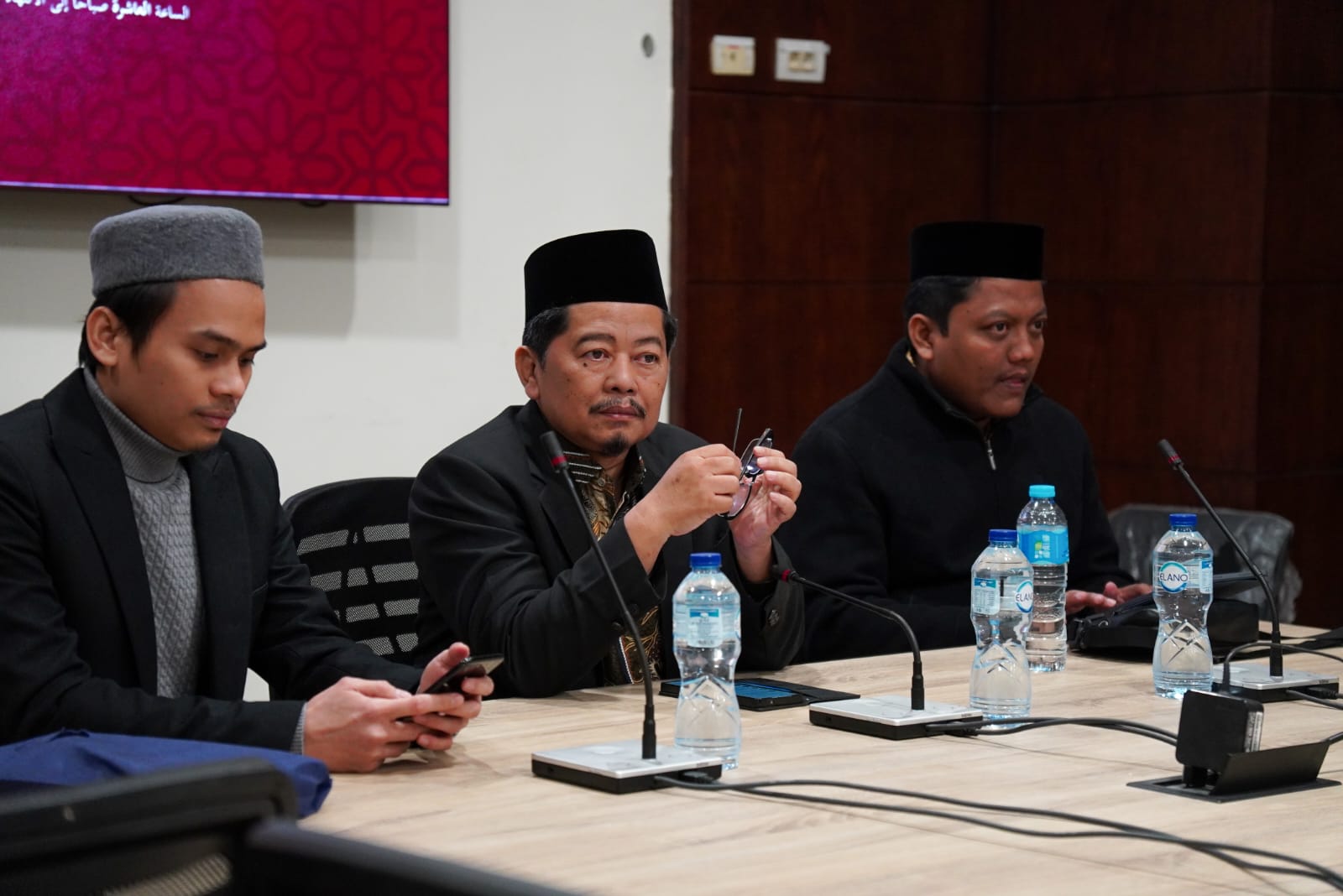
Ahmad Zubaidi (center), Deputy Chairman of the Indonesian Waqf Board, at a seminar held at the 57th Cairo International Book Fair (CIBF) in Cairo, Egypt, on Saturday (January 24, 2026). (The Ministry of Religious Affairs of the Republic of Indonesia)
The CIBF (Cairo International Book Fair) in Egypt featured two Indonesian speakers at a seminar titled ‘Social Harmony and the Management of Zakat and Waqf’.
Jakarta (Indonesia Window) – The 57th Cairo International Book Fair (CIBF) was enlivened by a seminar titled ‘Social Harmony and the Management of Zakat and Waqf’.
Zakat is the third pillar of Islam, representing a mandatory charitable obligation for adult Muslims, and waqf is an inalienable, perpetual, or temporary charitable endowment under Islamic law.
The seminar was held on Saturday (Jan. 24) as part of Indonesia's contribution to the largest international book fair in the Middle East and North Africa region, according to a report from the Indonesian Ministry of Religious Affairs on its website, as quoted by Indonesia Window on Tuesday.
The event was held in two sessions at two different locations. The first session took place from 10:00 AM to 12:00 PM Cairo time at Hall 1, 2nd Floor, Room No. 1 Haflah at-Tauqi', in the Egypt International Exhibition Center (EIEC).
Two speakers from Indonesia were presented: Ahmad Zubaidi, Deputy Chairman of the Indonesian Waqf Board of the Indonesian Ministry of Religious Affairs, and Ibn Sina, an academic and author of the book ‘Indunisiya wa Wakfuha: Min Turats al-Sya'bi ila Sumud al-Ummah’.
On the occasion, Ahmad Zubaidi was speaking about the enormous potential of waqf in Indonesia, particularly through the development of cash waqf integrated with sovereign sukuk (sharia-based securities).
He also reviewed the use of digital technology through the Satu Wakaf application to facilitate the public's waqf practices safely and transparently.
"Waqf in Indonesia continues to develop through innovation, both in terms of regulation, digitalization, and its use for education, social, and economic empowerment of the ummah community (Muslims)," he said.
Meanwhile, Ibn Sina explained that the practice of waqf in Indonesia grew from social traditions and mutual cooperation, then developed into a formal system managed institutionally.
According to him, waqf has functioned since its inception as an instrument to strengthen social values and community harmony.
The second session of the seminar was held at the Indonesian Pavilion from 1:00 PM to 3:00 PM Cairo time, featuring Egyptian scholar and social thinker Shaykh Amr al-Wardani.
Shaykh Amr al-Wardani discussed the concept of social harmony (insijām ijtimā‘ī) as the foundation for sustainable zakat and waqf management.
Shaykh Amr introduced five pillars of social harmony, which he called the ‘5G’ concept: clear goals and vision (ghāyah wa ru'yah), moral sincerity (giddiyyah), competency-based governance (gidārah, kafā’ah wa mahārah), quality implementation (gaudah), and the beauty of human values and ethics (gamāl).
"Social harmony does not arise automatically, but is built through zakat and waqf governance that is oriented toward value, quality, and tangible benefits for society," he said.
The Head of the Quran Printing Unit (UPQ) of the Islamic Community Guidance Department of the Indonesian Ministry of Religious Affairs, Ismail Nur, stated that the Indonesian Pavilion's participation in the 57th CIBF (Islamic Youth Forum) is an important opportunity to introduce Indonesian Islamic works and thought to the international community.
"The Indonesian Pavilion's participation in the 57th International Book Fair in Cairo provides us with the opportunity to introduce the Isyarah Mushaf, which is intended for deaf people worldwide. This exhibition also featured the works of Indonesian scholars who promote open, moderate, and tolerant Islamic teachings, while also introducing the concept of ecotheology that maintains harmony between nature and humans," he said.
He added that the presence of academics and the Indonesian Ministry of Religious Affairs officials in seminars and discussions at CIBF aims to foster direct dialogue with Middle Eastern and North African audiences.
"The presence of academics and the Ministry of Religious Affairs officials aims to bring the speakers closer to an international audience. By bringing concepts of ecotheology, education, zakat, waqf, and hajj management in Indonesia, we hope to foster a mutually beneficial exchange of ideas," he said.
The seminar was attended by Egyptian and Indonesia students as well as CIBF visitors from various countries. The lively discussion demonstrated the high level of international public interest in zakat and waqf as instruments of social ethics and community development.
The event affirmed Indonesia's commitment to continuously promoting the strengthening of zakat and waqf as instruments of social harmony and global well-being through an inclusive, moderate, and sustainable Islamic approach.
Reporting by Indonesia Window
Bagikan

Komentar
Berita Terkait

Indonesia's foreign debts in November 2022 remain under control
Indonesia
•
16 Jan 2023
Indonesian, Egyptian companies agree on cooperation worth 23.1 mln USD
Indonesia
•
03 Dec 2021
Indonesian government suspends access to Grok App
Indonesia
•
11 Jan 2026
Indonesia’s tourism ministry supports Muslim LifeFest 2024, maximizes potential of halal industry
Indonesia
•
27 Aug 2024

Berita Terbaru

Profile – Indonesian Islamic boarding school student discovers security flaws in systems of NASA, University of Melbourne
Indonesia
•
17 Sep 2026
Suahasil Nazara Indonesia’s new finance minister, replacing Purbaya
Indonesia
•
14 Sep 2026
Indonesia’s professor: ‘Dhikr’ in Islam not merely verbal utterance, but matter of awareness and conduct
Indonesia
•
14 Sep 2026

Minister: Airports affected by Mount Anak Krakatau volcanic ash reopen
Indonesia
•
08 Sep 2026