Indonesia increasingly vulnerable to tropical cyclones

08 March 2026
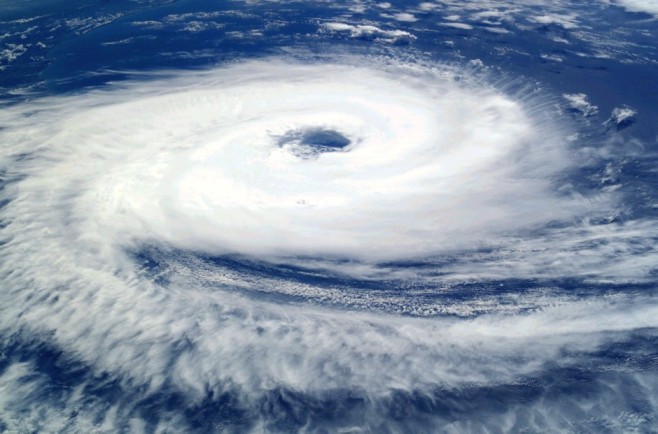
Illustration. (WikiImages from Pixabay)
The threat of tropical cyclones is increasingly looming over Indonesia, following rising cyclone intensity and shifts in cyclone formation areas due to climate change and warming sea temperatures.
Bogor, W Java (Indonesia Window) – Indonesia’s National Research and Innovation Agency (known as its abbreviation BRIN) has warned that the country is becoming increasingly vulnerable to the threat of tropical cyclones.
Recent research by BRIN shows an increase in cyclone intensity as well as a shift in cyclone formation areas due to climate change and rising sea surface temperatures.
The findings were presented by Yosef Prihanto, a researcher at BRIN’s Climate and Atmospheric Research Center, on Thursday (March 5), as cited from BRIN’s official website on Sunday.
According to Yosef, Indonesia has long been considered relatively safe from cyclones because of its location near the equator. However, this situation is now changing.
“Indonesia is no longer a region that is safe from cyclones. Warmer sea temperatures are increasing the chances of cyclone formation, even closer to our territory,” Yosef explained.
Based on data analysis from 1990 to 2023, hundreds of cyclones were recorded in the waters south of Indonesia, and dozens of them formed within Indonesia’s own territory, indicating a shift in patterns that requires greater vigilance.
Events such as cyclone Seroja in 2021 serve as a clear example of the impact of tropical cyclones, which triggered extreme rainfall, flash floods, and loss of life.
BRIN’s research also found that the combination of several global weather factors and warmer sea temperatures makes extreme weather events more likely to occur and last longer.
To improve preparedness, BRIN, together with Indonesia’s Meteorology, Climatology, and Geophysics Agency (BMKG), is developing an artificial intelligence-based prediction system.
This technology helps estimate the potential formation of cyclones several days before they occur.
As a result, the government and the public can have more time to prepare for potential disasters.
“The Climate and Atmospheric Research Center is developing predictive models that can help make early warning systems more accurate. With faster and more precise information, the risk of casualties can be reduced,” Yosef said.
In addition to strengthening technology, BRIN also emphasizes the importance of infrastructure readiness and increasing public understanding of weather information.
Efforts such as building wind-resistant structures, strengthening drainage systems, and rehabilitating mangrove forests in coastal areas are part of adaptation strategies.
At the same time, communities need to understand early warning alerts and know what steps to take during extreme weather events.
“Mitigation cannot be done alone. It requires collaboration between the government, researchers, and the public. The more prepared we are today, the smaller the risks will be in the future,” Yosef emphasized.
Reporting by Indonesia Window
Bagikan

Komentar
Berita Terkait
Implementation of IK-CEPA expected to expand Indonesia-Korea trade
Indonesia
•
03 Jan 2023

Indonesian, Chinese, Malaysian entrepreneurs sign MoA, promoting halal products in the region
Indonesia
•
30 Aug 2024

Exploring Indonesia’s possible contribution to resolve humanitarian crisis in Africa
Indonesia
•
18 Dec 2024

Essence of ‘Bhinneka Tunggal Ika’: How faith and harmony unlock true societal prosperity
Indonesia
•
17 Jul 2026


Berita Terbaru

Profile – Indonesian Islamic boarding school student discovers security flaws in systems of NASA, University of Melbourne
Indonesia
•
17 Sep 2026

Suahasil Nazara Indonesia’s new finance minister, replacing Purbaya
Indonesia
•
14 Sep 2026

Indonesia’s professor: ‘Dhikr’ in Islam not merely verbal utterance, but matter of awareness and conduct
Indonesia
•
14 Sep 2026

Minister: Airports affected by Mount Anak Krakatau volcanic ash reopen
Indonesia
•
08 Sep 2026