Minister: Reforming 'dam' regulations to strengthen local livestock farmers’ economy

11 December 2025
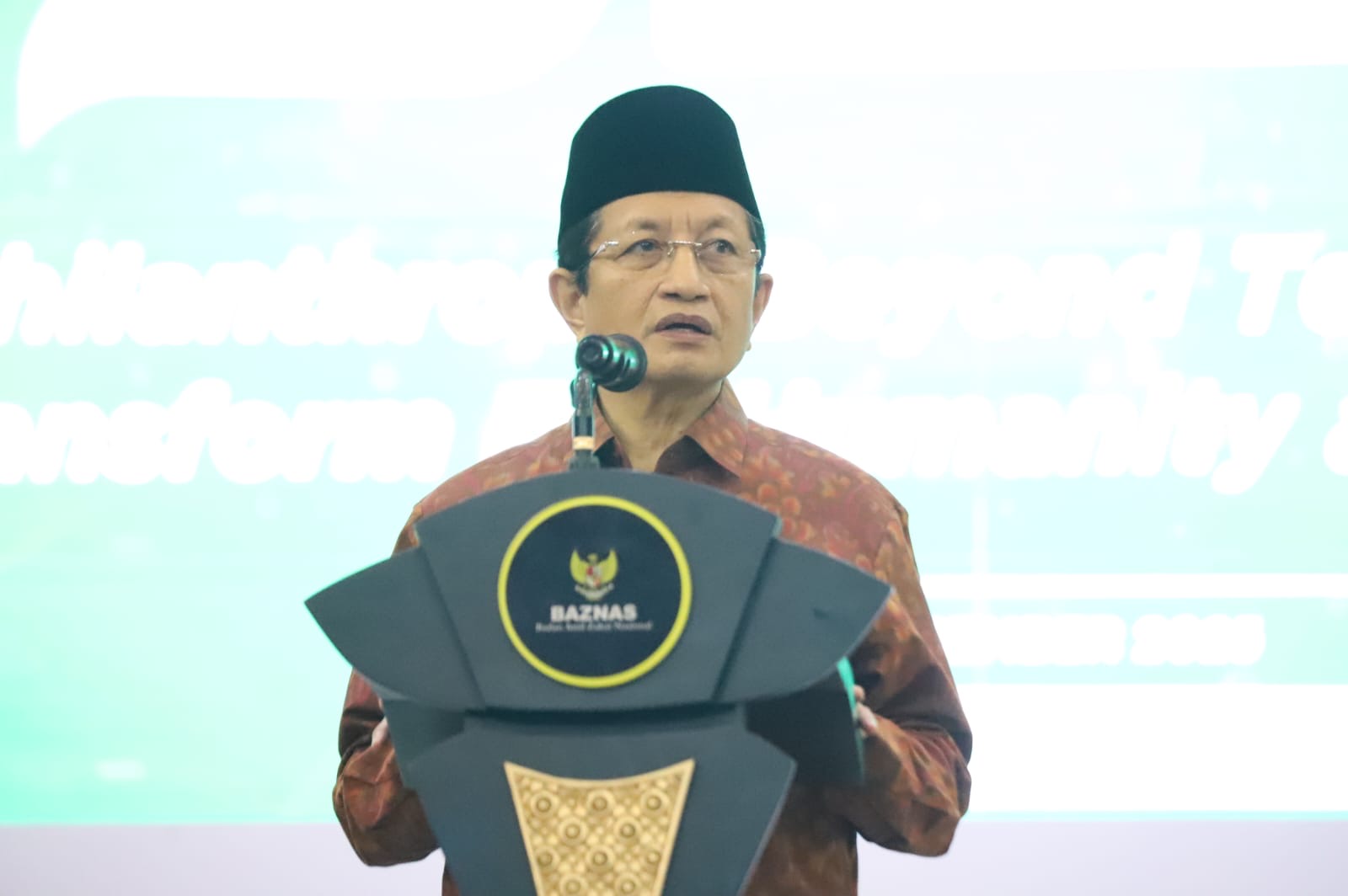
Indonesian Minister of Religious Affairs, Nasaruddin Umar. (The Ministry of Religious Affairs of the Republic of Indonesia)
Dam management requires new regulations and transparency to make pilgrims able to control the process of purchasing sacrificial animals and prevent manipulation in the field.
Jakarta (Indonesia Window) – New regulations are needed for the dam management to prevent manipulation in the field, Indonesia’s Religious Affairs Minister Nasaruddin Umar said at the 9th ICONZ International Conference of Zakat at the State Islamic University (UIN) Jakarta on Wednesday (12/10).Dam is a fine or ransom paid during the Hajj and Umrah pilgrimages for violating prohibitions or neglecting obligations.Dam usually involves the slaughter of sacrificial animals (camels, cows, goats) or other options such as fasting or charity, aimed at atonement to ensure the validity of the worship."I completely agree with the fatwa from the Egyptian Ulema Council that dams can be implemented in each country. It's easy to control, there's no fraud, and the meat is consumed by the country's own citizens," Nasaruddin Umar said.He said that it is difficult to ensure the actual number of goats slaughtered in Saudi Arabia, citing inconsistent data and limited access for pilgrims to conduct supervision."Have we ever gone to the desert to check if there are 200 goats? Let's say the number of Hajj pilgrims is two million. If, for example, 70 percent of those pilgrims are able to afford it, then 1,400,000 goats should have died during the slaughter in Mecca," he noted.The minister also explained that pilgrims cannot control the goat purchasing process for dams, thus opening up opportunities for irregularities.According to him, such a situation is detrimental to pilgrims. "Sometimes we gather 100 people, but only 10 are purchased. We never control where they are purchased. So fraud also occurs," he said.The dam slaughter mechanism in Indonesia can create dual benefits, including for local livestock farmers, he said, emphasizing the importance of transparency in dam management."Indonesian goat farmers are prosperous, and their meat is consumed in Indonesia. But if the meat is sold in Saudi Arabia, we don't know whether it's being purchased or not. So if we entrust it to BAZNAS (the Indonesian National Zakat Agency), we feel relieved," he explained.In addition to dams, the minister also discussed the significant economic value of qurban (ritual of slaughtering livestock) if it is managed professionally and follows strict regulations.“So, the amount of money collected specifically for qurban alone is 34 trillion rupiahs. If we manage this, in collaboration with the government, for example, we could use the American method, prohibiting slaughtering animals outside of slaughterhouses because that can pollute the environment. There are many regulations we can implement so that all forms of slaughtering are managed by local governments," he said.Reporting by Indonesia WindowBagikan

Komentar
Berita Terkait

Napun Gete Dam in Indonesia's E Nusa Tenggara inaugurated, holding 11.22 mln cubic meters of waters
Indonesia
•
24 Feb 2021

Foreign tourists to face punishment if they violate rules in Indonesia
Indonesia
•
14 Mar 2023

COVID-19 – Indonesia needs 36,000 more beds for patients
Indonesia
•
11 Jan 2021
6.4 magnitude quake shakes western Indonesia, no tsunami reported
Indonesia
•
29 Aug 2022


Berita Terbaru

Profile – Indonesian Islamic boarding school student discovers security flaws in systems of NASA, University of Melbourne
Indonesia
•
17 Sep 2026
Suahasil Nazara Indonesia’s new finance minister, replacing Purbaya
Indonesia
•
14 Sep 2026
Indonesia’s professor: ‘Dhikr’ in Islam not merely verbal utterance, but matter of awareness and conduct
Indonesia
•
14 Sep 2026

Minister: Airports affected by Mount Anak Krakatau volcanic ash reopen
Indonesia
•
08 Sep 2026