Golkar Politician Prof. Henry Indraguna Asks for Quick Government Response Regarding Trump's 32 percent Import Tariff

08 April 2025
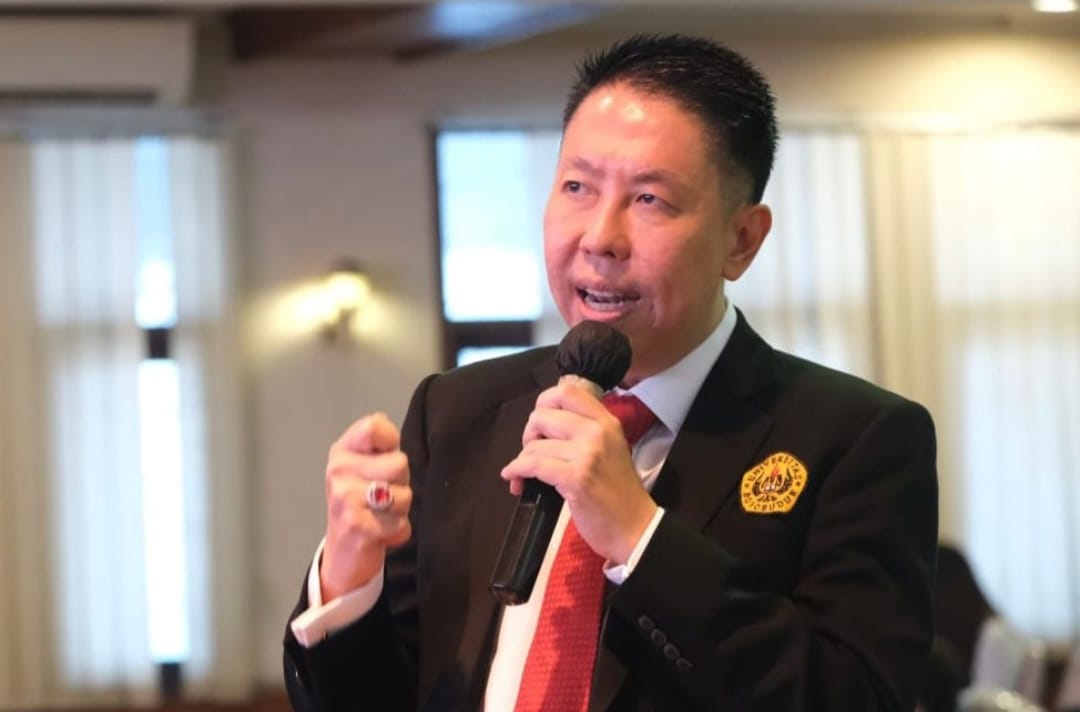
Golkar politician Prof Henry Indraguna asked for a quick response from the government regarding Trump's 32 pct import tariff, especially to save millions of workers and Indonesia's export competitiveness due to American trade protectionism. (Photo: Curtesy)
The 32 percent import tariff policy announced by the President of the United States (US) Donald Trump on April 2, 2025 and will take effect on April 9, 2025 continues to be in the spotlight.
Jakarta (Indonesia Window) - The 32 percent import tariff policy announced by the President of the United States (US) Donald Trump on April 2, 2025 and will take effect on April 9, 2025 continues to be in the spotlight.Golkar Party politician Prof. Dr. Henry Indraguna praised and criticized the Indonesian government's response to Uncle Sam's economic policy.Golkar is one of well-noted political parties in Indonesia.According to the expert advisor to the Research and Development Center of the Golkar Party, the government's current response has not been able to save workers and MSMEs (Micro, Small, and Medium Enterprises).Moreover, the execution is still in the planning stage. The Indonesian people might be those who suffer the most from this ‘America First’ protectionist policy if the Indonesian government is slow to act."The most obvious impact is that the price of goods will increase, people's purchasing power will be suppressed. The latest data shows that 40 thousand workers have been laid off as of February 2025 based on Apindo data. The textile, footwear, and electronics sectors that depend on exports to the US have been hit hard," said Prof. Henry to suarakarya.id in Jakarta, Monday (April 7, 2025).Prof. Henry also reminded that the weakening of the rupiah (Indonesia’s currency) which is currently at 16,995 rupiahs per U.S. dollar based on the rupiah exchange rate against the U.S. dollar at BCA (an Indonesian private bank) at 22:38 local time, which has the potential to reach 17,000 rupiahs has caused the price of imported goods, including food and secondary needs, to soar."People who live from daily wages or micro businesses are the main victims. Their expenses are increasing, but income is stagnant," Prof. Henry noted.Economic data reinforces this concern. Indonesia's exports to the US, which contribute 10.5 percent of total non-oil and non-gas exports, are threatened to fall by 20 percent, potentially cutting GDP (Gross Domestic Product) by 0.4 percent.MSMEs as the supply chain of the export industries have also lost orders, exacerbating economic pressures at the local level."Small traders and craftsmen who have been the backbone of the people’s economy have now seen their turnover drop drastically," the Deputy Chairperson of the Central Leadership Board of the Nusantara Youth Gront (locally known as its abbreviation Bapera).Even so, he still appreciates several government steps that are quite anticipatory and responsive to Trump's policies that have triggered negative sentiment in the world.The Deputy Chair of the Advisory Board of the Indonesian Advocates Congress (KAI) said that diplomacy to Washington, market diversification to China, India, and ASEAN, and the Indonesian Central Bank’s commitment to maintaining rupiah stability deserve appreciation.There is also a plan for down streaming and reviving 80 thousand village cooperatives as a tactical step to maintain the domestic economy.Inefficient bureaucracyProf. Henry also highlighted the wasteful and inefficient bureaucratic approaches."Cross-ministerial meetings only waste more funds of the state budget (locally known as its abbrevistion APBN). Let’s say one meeting costs 500 million rupiahs. 10 meetings can suck up the budget up to 5 billion rupiahs. So that money could actually provide subsidies for workers or MSMEs. And not become a piled-up report that never ends,” Prof. Henry said.He gave input to the government so that it could act quickly by utilizing existing data. Such as export-import statistics and reports from Apindo (the Association of Indonesian Enterpreneurs), rather than spending time recalculating."The people do not need repeated meetings anymore. But what is needed is real action. Accelerate negotiations at the WTO and divert the meeting budget for social cushions. We must not be left behind by our neighboring countries," he stressed.The professor from Unissula (the Sultan Agung Islamic University in Semarang, Central Java, then mentioned a principle conveyed by economist John Maynard Keynes."In the long term, we all die. The government must realize that delaying action only prolongs the suffering of the people who can no longer wait," the Doctor of Law from UNS State University in Surakarta, Central Java, and Borobudur University Jakarta.Reporting by Indonesia WindowBagikan

Komentar
Berita Terkait
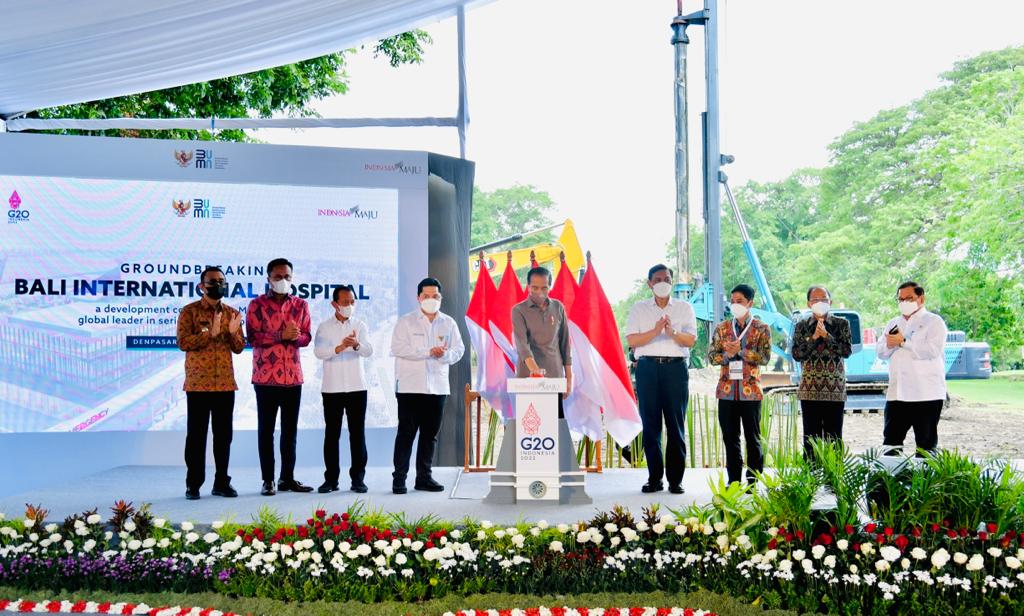
Indonesia to build Bali International Hospital with US Mayo Clinic
Indonesia
•
28 Dec 2021
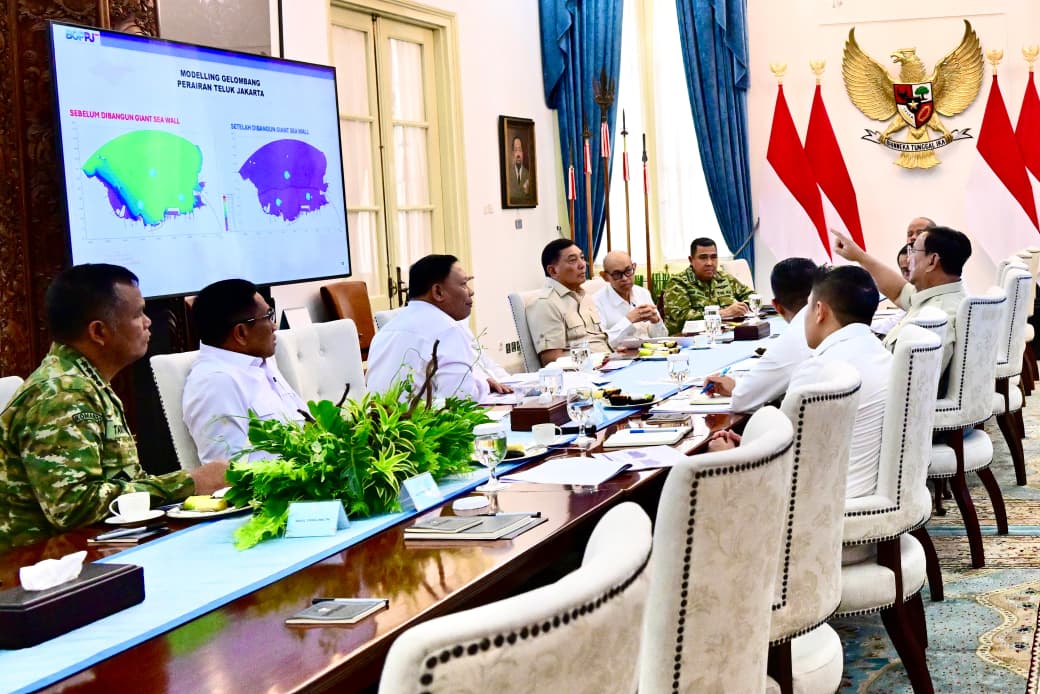
Indonesian president leads meeting to accelerate Giant Sea Wall development along northern coast of Java
Indonesia
•
21 Apr 2026
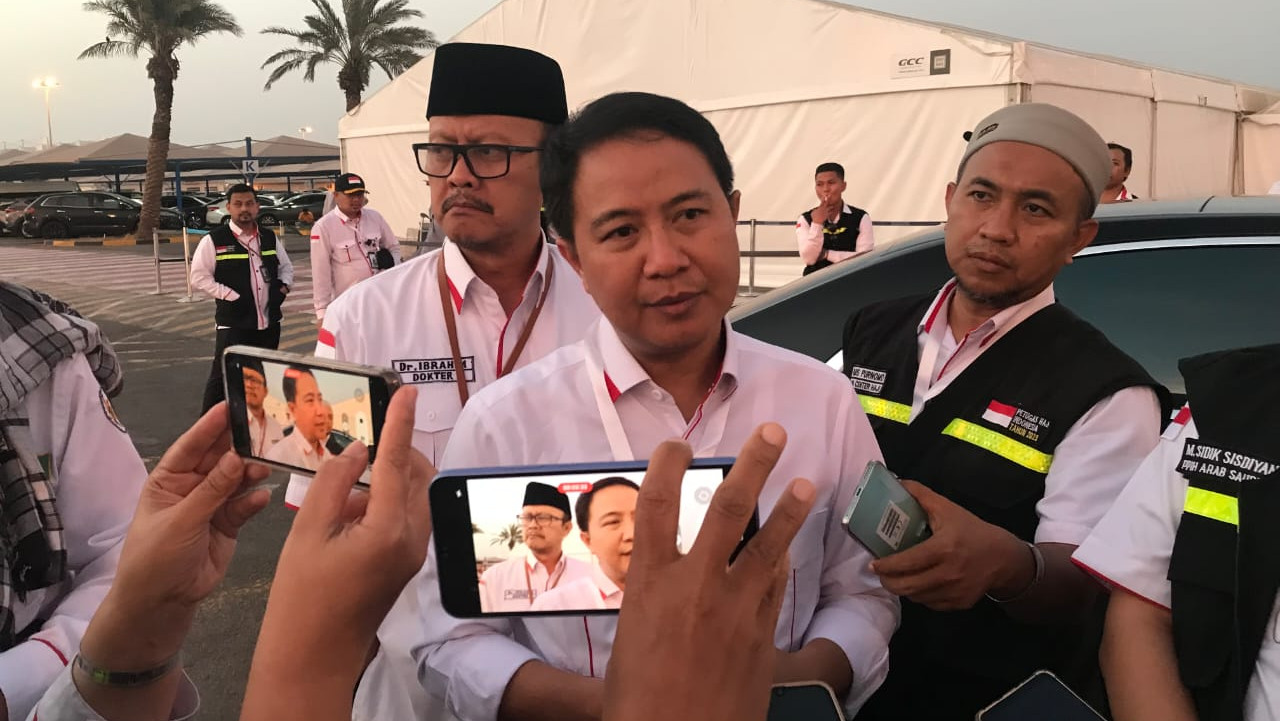
Indonesia asks hajj pilgrims' rights to be fulfilled
Indonesia
•
29 Jun 2023
Indonesia’s religious ministry, Al-Sharq institution develop multimedia Arabic learning program
Indonesia
•
15 Dec 2021


Berita Terbaru

Profile – Indonesian Islamic boarding school student discovers security flaws in systems of NASA, University of Melbourne
Indonesia
•
17 Sep 2026
Suahasil Nazara Indonesia’s new finance minister, replacing Purbaya
Indonesia
•
14 Sep 2026
Indonesia’s professor: ‘Dhikr’ in Islam not merely verbal utterance, but matter of awareness and conduct
Indonesia
•
14 Sep 2026
Minister: Airports affected by Mount Anak Krakatau volcanic ash reopen
Indonesia
•
08 Sep 2026