Chinese scientists reveal carbon sink on Qinghai-Xizang Plateau

01 August 2024
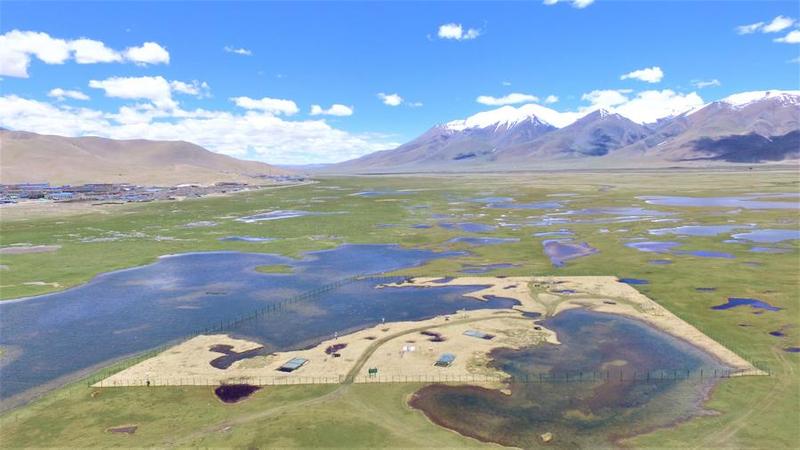
An aerial drone photo taken on June 7, 2021 shows the alpine wetland observation station built by the Institute of Mountain Hazards and Environment (IMHE) of the Chinese Academy of Sciences in Xainza County of Nagqu City, southwest China's Xizang Autonomous Region. (IMHE/Handout via Xinhua)
The improvement of the carbon sink function of the terrestrial ecosystem in southwest China's Xizang Autonomous Region is an important manifestation of the effectiveness of the ecological security barrier construction and changing climate in the region.
Lhasa, Tibet Autonomous Region (Xinhua/Indonesia Window) – Despite the global warming and wetting climate, the Qinghai-Xizang Plateau plays an important role as a carbon sink, according to recent studies conducted by the Institute of Mountain Hazards and Environment (IMHE) of the Chinese Academy of Sciences.The improvement of the carbon sink function of the terrestrial ecosystem in southwest China's Xizang Autonomous Region is an important manifestation of the effectiveness of the ecological security barrier construction and changing climate in the region, said Wei Da, a researcher with the IMHE.Quantifying the dynamics of carbon sink under climate change and ecological restoration on the Qinghai-Xizang Plateau is one of the priority scientific concerns that urgently need to be addressed, scientists say.The first demonstration base for carbon sink monitoring of artificial forests in Xizang was established in the city of Shannan this year.The IMHE also led the construction of the Qinghai-Xizang Plateau terrestrial ecosystem carbon flux observation network, which includes stations in Xainza, Shannan, Yadong, Hoh Xil, Gerze, Zhongba, Madoi, Shuanghu and Serling Co, covering typical alpine ecosystems such as forests, shrubs, meadows, grasslands, wetlands and lakes.The network synchronously measures carbon flux, water and heat flux, photosynthetically active radiation, air temperature and humidity, soil temperature and humidity and precipitation.Based on this monitoring network and cooperation with other research organizations, the research team from the IMHE has found that the Qinghai-Xizang Plateau remains an important carbon sink with potential in a warmer and wetter climate.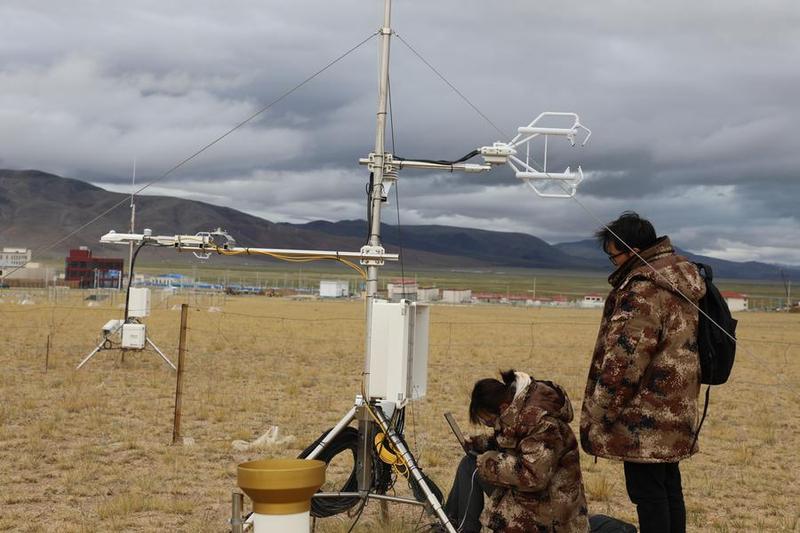
Scientists from the Institute of Mountain Hazards and Environment (IMHE) of the Chinese Academy of Sciences collect data and maintain carbon flux monitoring equipment in southwest China's Xizang Autonomous Region, on Aug. 3, 2022.
Bagikan

Komentar
Berita Terkait

Kalimantan has a new species of horned frog
Indonesia
•
05 Oct 2019

The world recognizes the progress of Indonesia's nuclear technology
Indonesia
•
25 Sep 2019

COVID-19 – Indonesia conducts clinical trial for herbal immunomodulator
Indonesia
•
18 Aug 2020
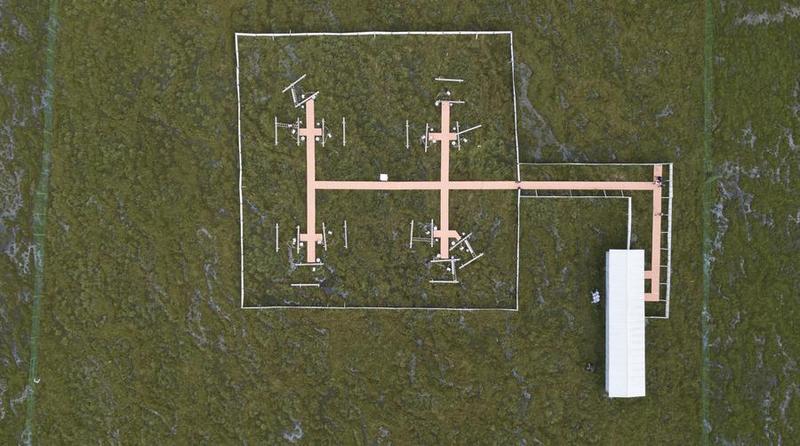
Chinese scientists research on protecting, restoring high-altitude wetlands
Indonesia
•
27 Jul 2024


Berita Terbaru

Feature – China pioneers AI-driven education as world seeks new schooling models
Indonesia
•
23 Aug 2026

China marks National Ecology Day with solid gains in green push
Indonesia
•
17 Aug 2026
Beijing ranks among global megacities with high biodiversity levels
Indonesia
•
25 May 2026

China increasingly significant in global biodiversity conservation, says British plant charity
Indonesia
•
25 May 2026